


Glamping guide
How to write a glamping business plan
Ten steps from the first idea to a plan you can take to a bank, an investor or a partner.
A business plan turns a dream about a beautiful piece of land into numbers and decisions you can test. It is also what a bank, an investor or a partner will ask to see. Here are ten steps to build one for a glamping site in India.
Describe the idea
Who is the site for, and why will they choose it? Couples on a weekend away, families, adventure groups and companies on offsites all want different things. Write the idea in one paragraph.
Study the market
Look at nearby resorts, homestays and camps: their rates, how full they are, and what guests praise or complain about in reviews. Find the gap your site can fill.
Assess the land
Check road access, slope, drainage and flood risk, water, power, mobile signal, views and privacy. Walk the land in the monsoon if you can.
Check permissions
Ask the local panchayat or municipality, and your state tourism department, what approvals apply to land use, temporary structures, water, sewage and fire safety. Rules differ from state to state.
Choose the units and the layout
Decide how many units, which types (tents, domes, pods), and where the common areas, parking and services go. See our guide on designing a glamping resort.
Build the investment budget
Units, decks, bathrooms, site work, services, furniture, common areas, approvals and design fees, plus a contingency of 10% to 15%.
Estimate running costs
Staff, food, power and water, laundry, upkeep, insurance, booking commissions, marketing and software.
Model the income
Rates by season, expected occupancy, and extra income from food, experiences and events. Work out the break even point and test a cautious case.
Plan the marketing
Website and booking engine, Google Business Profile, booking sites, Instagram and short videos, partnerships with travel planners and companies.
Set the funding and the timeline
How much is your own money, a loan or an investor's, and when each phase is built and opened. Leave time for approvals and the monsoon.
What the finished plan should contain
- A one page summary: the idea, the location, the investment and the expected return.
- The market and the guests you are aiming for.
- The site plan, the units and the guest experience.
- The permissions needed and their status.
- The investment budget, the running costs and income for at least five years.
- Funding, the build timeline and the main risks with how you will handle them.
Tips from projects we have worked on
- Spend time on the arrival. The road in, the sign at the gate and the first view set the mood for the whole stay.
- Give every unit privacy. Space units so decks and windows do not face each other.
- Budget for bathrooms early. They are often the biggest surprise in the cost plan.
- Build the common areas for the full plan, even if you open with fewer units.
For the money side in more detail, read is glamping a good business. When you have a site in mind, share your requirements and we will help you size the units and the budget.
Glamping guides
Keep reading
A short history of glamping
From nomad tents and royal camps to the domes and safari tents of today.
Is glamping a good business?
What it costs, what a unit can earn, and what decides whether a site pays back.
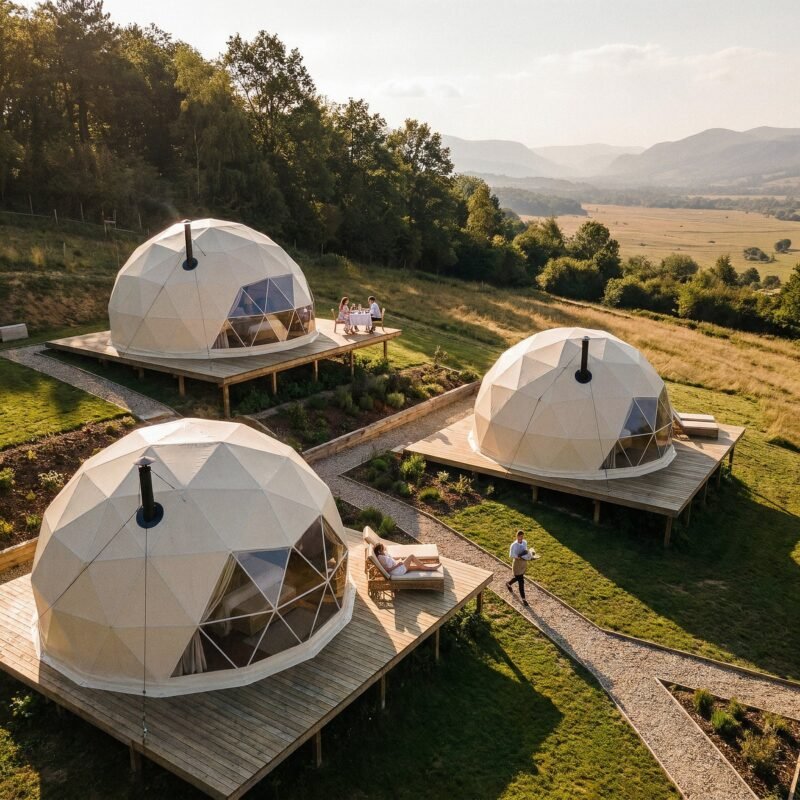
How to design a glamping resort
Land, arrival, spacing, climate and the details guests remember.
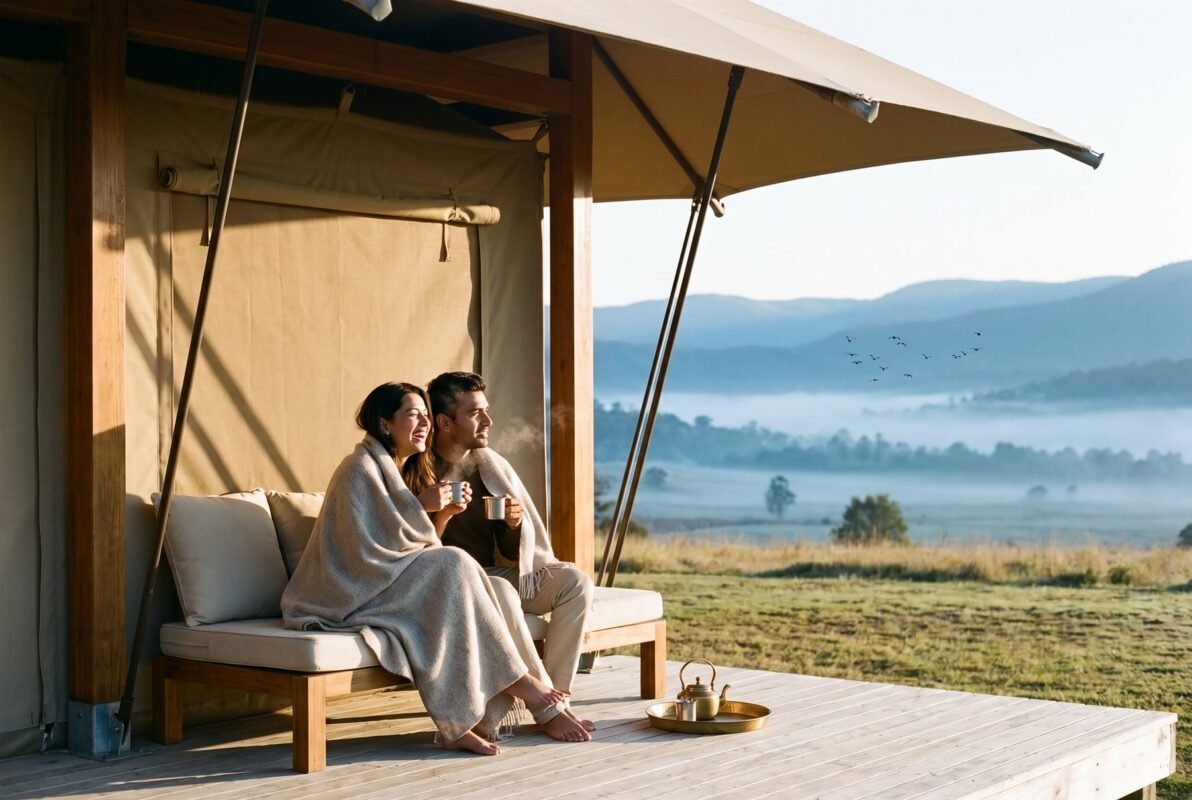
11 questions about starting a glamping business
Straight answers on cost, land, permissions, tents and getting guests.
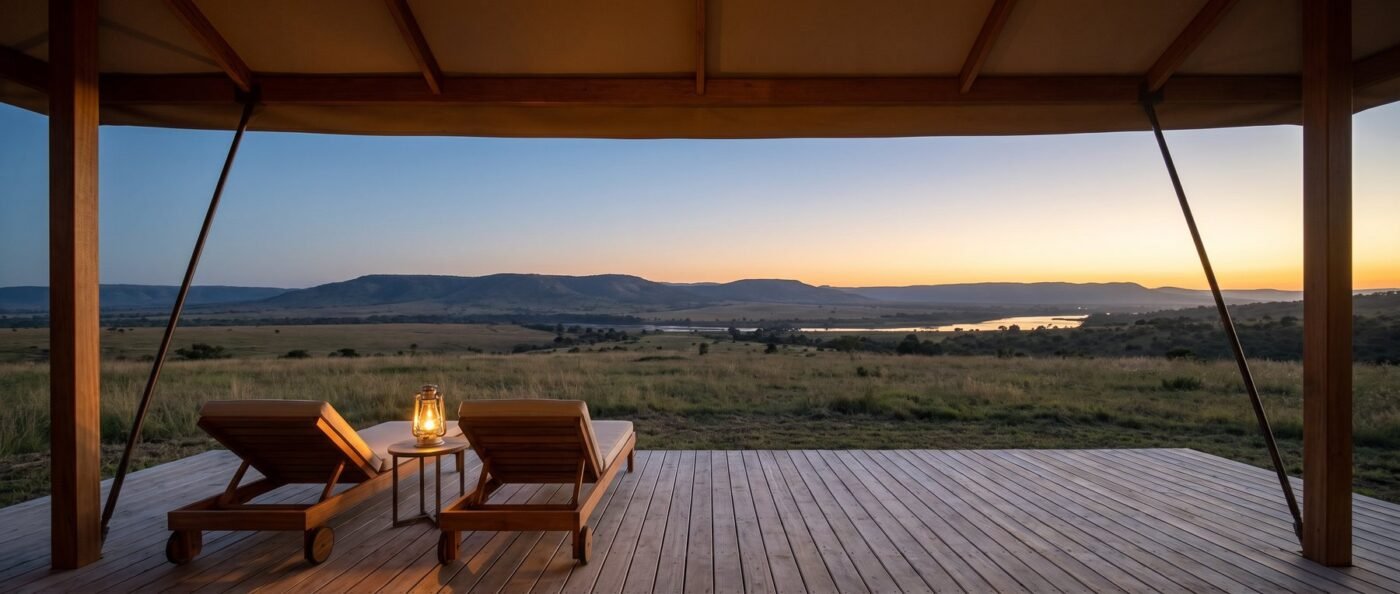
Planning a glamping site?
Tell us about your land and the guests you want. We help with the units, the layout and the numbers.