


Glamping guide
11 questions about starting a glamping business
Straight answers on cost, land, permissions, tents and getting guests.
These are the questions we are asked most often by land owners and investors planning a glamping site in India. Every project is different, so treat the answers as a starting point and talk to us about yours.
1. Are luxury tent businesses profitable in India?
They can be. Glamping units can command good nightly rates, and tents and pods can be built faster than buildings. Profit depends on the location, the guest experience, occupancy and keeping running costs in check. Our guide on whether glamping is a good business works through an example.
2. How much does it cost to start a glamping business?
It depends on the location, the number of units and the comfort level. A single furnished unit can cost from about ₹5 lakh to ₹50 lakh. Add site work, services, bathrooms, common areas, approvals and a contingency. See the tent prices on our site for a starting point.
3. Do I need permission to put up luxury tents?
Rules differ by state and by local body. Many tents count as temporary or semi permanent structures, but land use, water, sewage and fire safety can still need approval, and a commercial stay may need registration with the state tourism department. Check with your panchayat or municipality before you build.
4. What are the best structures for my site?
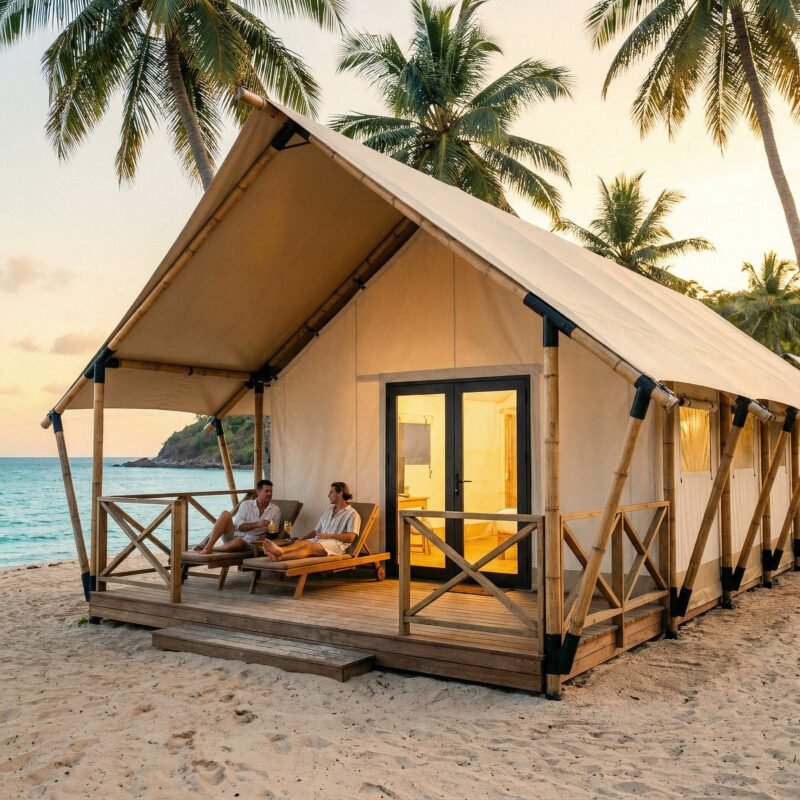
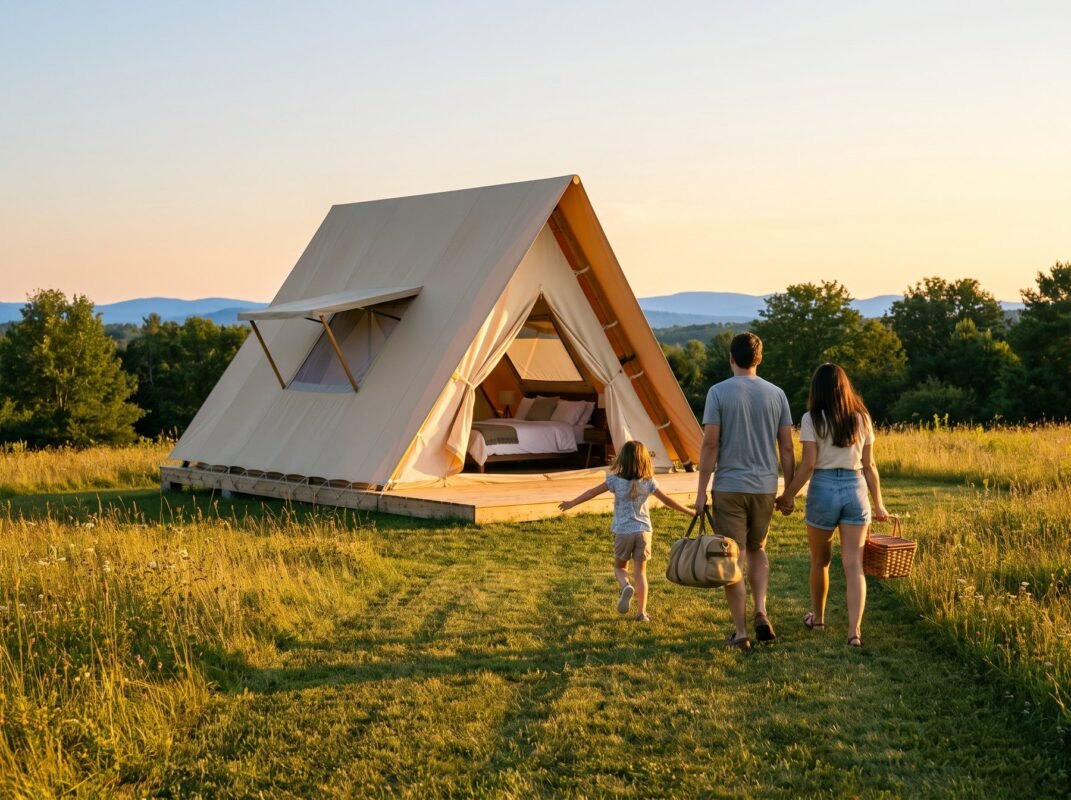
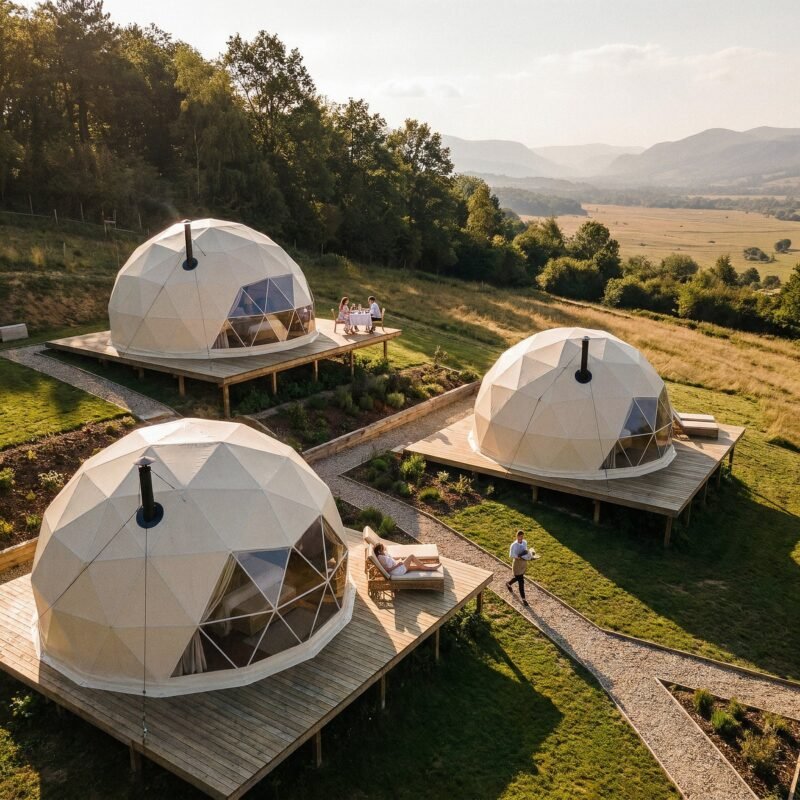
It depends on the location, the guests and the look you want. Safari tents suit families and multi unit sites, domes and A frames suit couples and views, and prefabricated pods suit places that need more insulation. A mix lets you offer different prices.
5. Can I use my land for glamping?
Usually, if it is large enough for the units you plan, has safe road access, and can be connected to water and power. Check the land use status and flood risk first.
6. How much land do I need?
It depends on the number of units and how much privacy you want to give each one. Allow generous space around every unit, plus room for parking, paths, common areas and services. A small boutique site needs far less land than a resort with many units.
7. Do luxury tents come with toilets, heating and electricity?
They can. Our tents can be fitted with wiring, lighting, air conditioning or heating, and an ensuite bathroom or a ready made washroom cabin. You choose the level of comfort for each unit.

8. How long do luxury tents last?
With good care, the frame lasts for many years and the canvas can be replaced on its own when it wears out. Life depends on the climate, sun, rain and how well the tent is cleaned and maintained.
9. Where can I buy luxury tents for my site?
CampKing designs and makes safari tents, domes, A frame tents and prefabricated pods in India. You can browse the range or book a visit to see tents in person in Bengaluru.
10. How do I know if my project is feasible?
A feasibility study looks at the market, the site, the permissions, the design and the money together. It shows whether the project works and where the risks are. Our business plan guide covers the same ground step by step.
11. How do I attract guests to my glamping site?
Build a good website with direct booking, set up your Google Business Profile, list on booking sites, and post photos and short videos on Instagram. Know who your guests are and give them a reason to choose you: a view, a feature or an experience they cannot get elsewhere. Then look after them well, because reviews bring the next guests.
Glamping guides
Keep reading
A short history of glamping
From nomad tents and royal camps to the domes and safari tents of today.
Is glamping a good business?
What it costs, what a unit can earn, and what decides whether a site pays back.
How to write a glamping business plan
Ten steps from the first idea to a plan you can take to a bank or an investor.
How to design a glamping resort
Land, arrival, spacing, climate and the details guests remember.
Planning a glamping site?
Tell us about your land and the guests you want. We help with the units, the layout and the numbers.