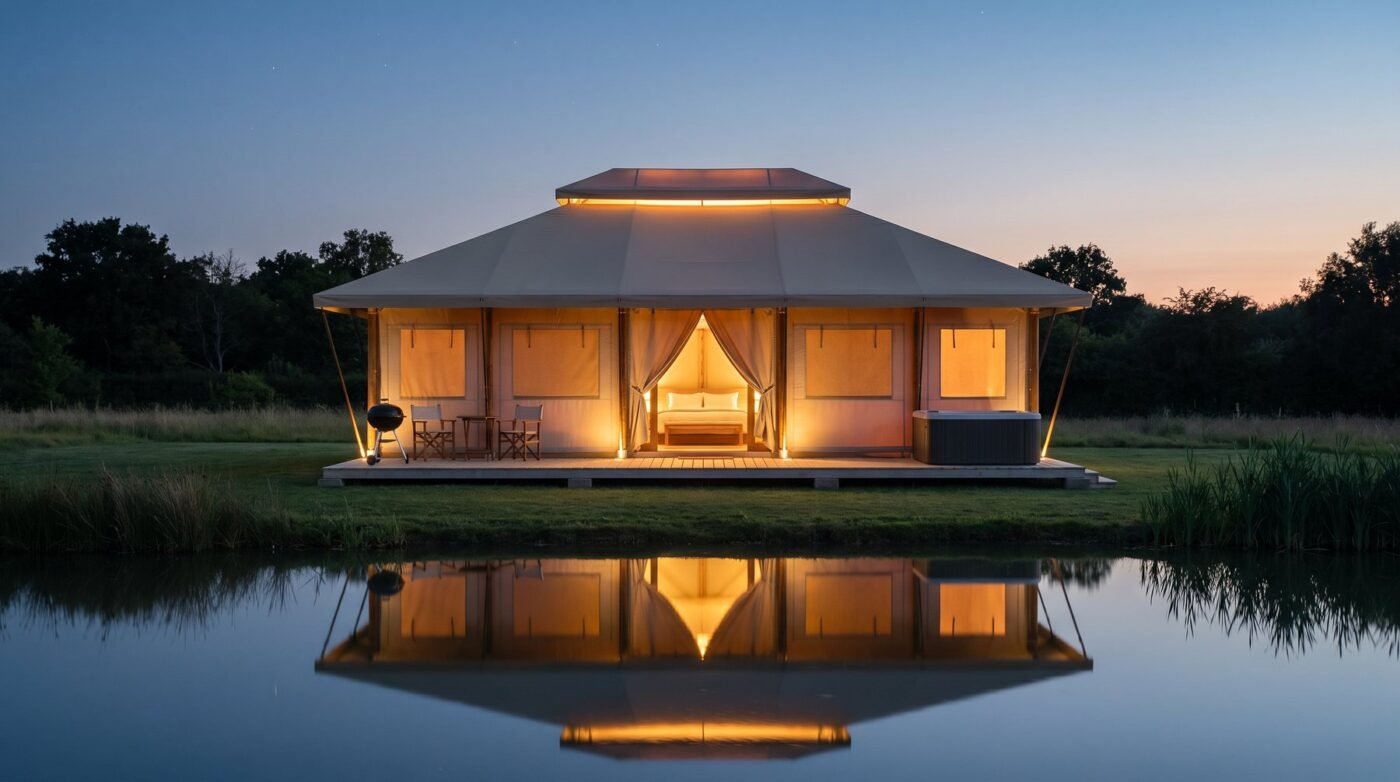
Glamping guide
A short history of glamping
Glamping feels new, but people have lived in comfortable tents for centuries. Here is how the idea travelled from nomad camps to modern resorts.
Glamping, short for glamorous camping, means sleeping close to nature without giving up a proper bed, good light and a private bathroom. The word is only about twenty years old. The idea is much older: for centuries, rulers, traders and travellers have lived in tents that were every bit as comfortable as a house.
From nomad tents to royal camps
- Central AsiaThe felt yurts, or gers, of the steppe could be packed onto animals and set up again in a day, yet inside they were warm, carpeted and richly decorated. The Mongol rulers of the 13th century held court in large gers.
- 1520, FranceHenry VIII of England and Francis I of France met near Calais at the Field of the Cloth of Gold, a camp of painted tents and a temporary palace. It took its name from the gold cloth used for the tents.
- Ottoman EmpireThe sultans travelled with tents of embroidered silk and cotton, set out like palaces with rooms, courtyards and gardens. Several survive in museums today.
- Mughal IndiaThe emperors moved with vast tented camps that held a court, kitchens, stables and private quarters, carried by elephants and camels. The royal tent camps of Rajasthan keep the tradition alive.
- Early 1900s, East AfricaTravellers on safari slept in canvas tents with beds, rugs, bathtubs and a dining tent. The safari tent is still the starting point for many glamping tents.
- 2000s, BritainThe word glamping appeared in Britain and spread quickly. The Oxford English Dictionary added it in 2016.

Why glamping took off
Three things came together. Travellers began to prefer short trips close to home, often by car, and wanted something more memorable than a hotel room. Social media rewarded places that look special. And land owners found that a few well made tents could earn from land that would never suit a hotel.
Guests get the sound of rain on canvas, a fire under the stars and a sunrise from the bed, with a hot shower a few steps away. Owners get a property that can be built faster and with a lighter footprint than a building, and that can grow one unit at a time.
Glamping in India today
India has every landscape glamping needs: Himalayan valleys, tea and coffee country, deserts, beaches, backwaters and forests, with large cities a few hours away. Sites range from desert camps in Rajasthan and riverside tents in the hills to farm stays near Bengaluru, Pune and Delhi.
The units have changed too. Alongside classic safari tents there are geodesic domes, A frame tents, bubble tents and prefabricated pods, built for monsoon rain, summer heat and Himalayan cold.
Where to go from here
If you are thinking about a glamping site of your own, start with our guide on whether glamping is a good business, then see how to write the business plan. You can also browse our tents.
Glamping guides
Keep reading
Is glamping a good business?
What it costs, what a unit can earn, and what decides whether a site pays back.
How to write a glamping business plan
Ten steps from the first idea to a plan you can take to a bank or an investor.
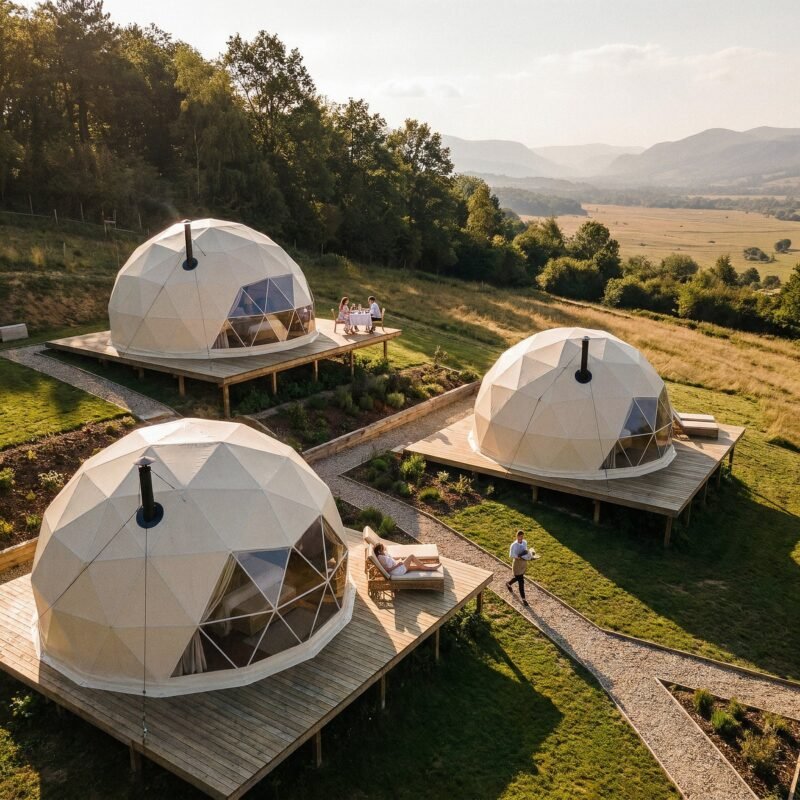
How to design a glamping resort
Land, arrival, spacing, climate and the details guests remember.
11 questions about starting a glamping business
Straight answers on cost, land, permissions, tents and getting guests.
Planning a glamping site?
Tell us about your land and the guests you want. We help with the units, the layout and the numbers.